1. Foundation and Fundamentals of Chemistry
🎯 Learning Outcomes
By the end of this chapter, students should be able to:
- Define chemistry, matter, and other key terms of chemistry
- Recognise the importance and scope of chemistry
- Explain atom, molecule, radicals, valency, molecular formula, and empirical formula
- Recall simple ions with their name, formula, valency, and charges
- Write the molecular formula of simple compounds
- Define and use the terms relative atomic mass, relative molecular mass, and relative formula mass
- Write/recall the atomic masses of the first 30 elements of the periodic table
- Calculate the percentage composition of constituent elements from the molecular formula
1 🔬 General Introduction to Chemistry ▼
Chemistry is the scientific study of matter.
Classification of Matter
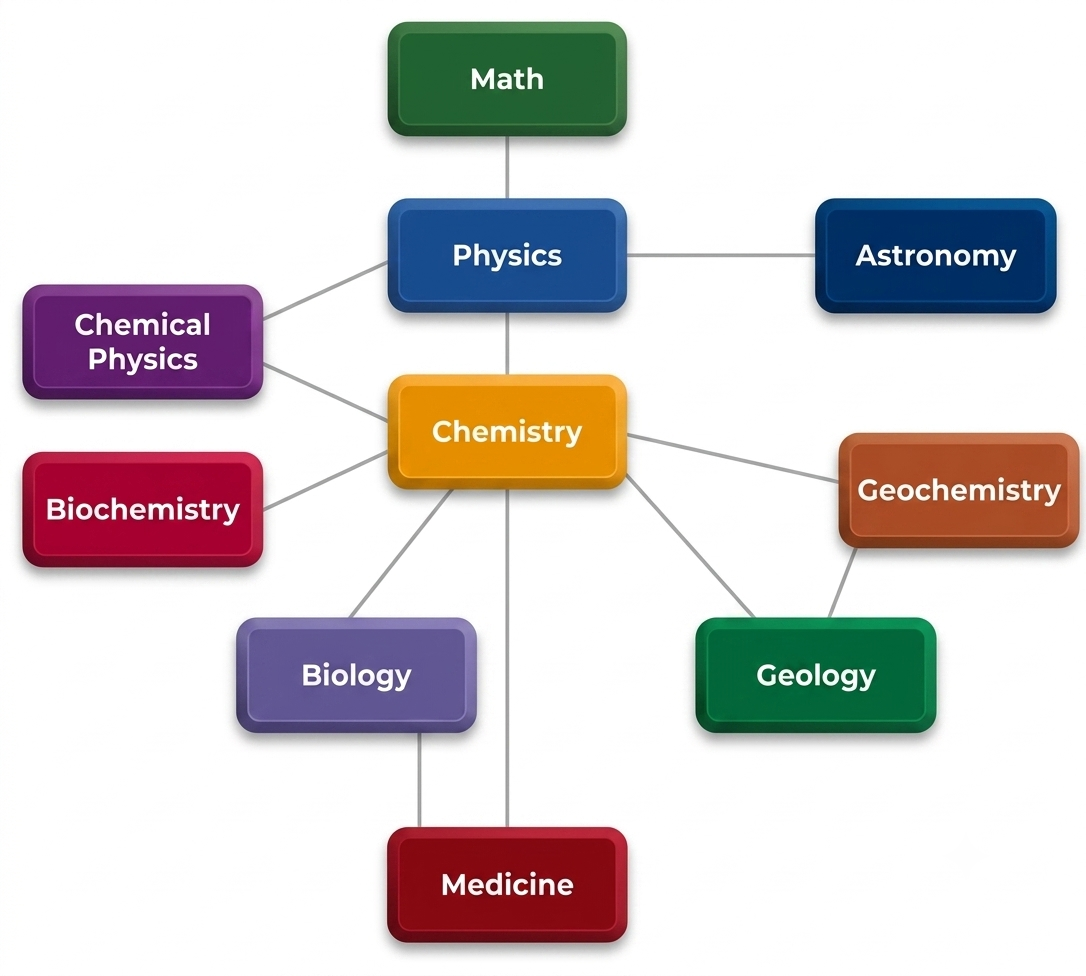
Figure 1: Classification of Matter — Physical and Chemical Classification
Nature of Science
2 🌍 Importance and Scope of Chemistry ▼
Chemistry isn’t just a school subject — it’s the foundation of almost every modern profession and industry.
Chemistry is essential in modern daily life and is a part of the curriculum for many modern fields such as medicine, pharmacy, biochemistry, anatomy, engineering, food and dairy, nutrition, and industries like beverages, paints, dyes, drugs, fertilisers, and pesticides.
Fulfilment of Basic Needs
Main Branches of Chemistry
The Relationships Between Major Branches of Science
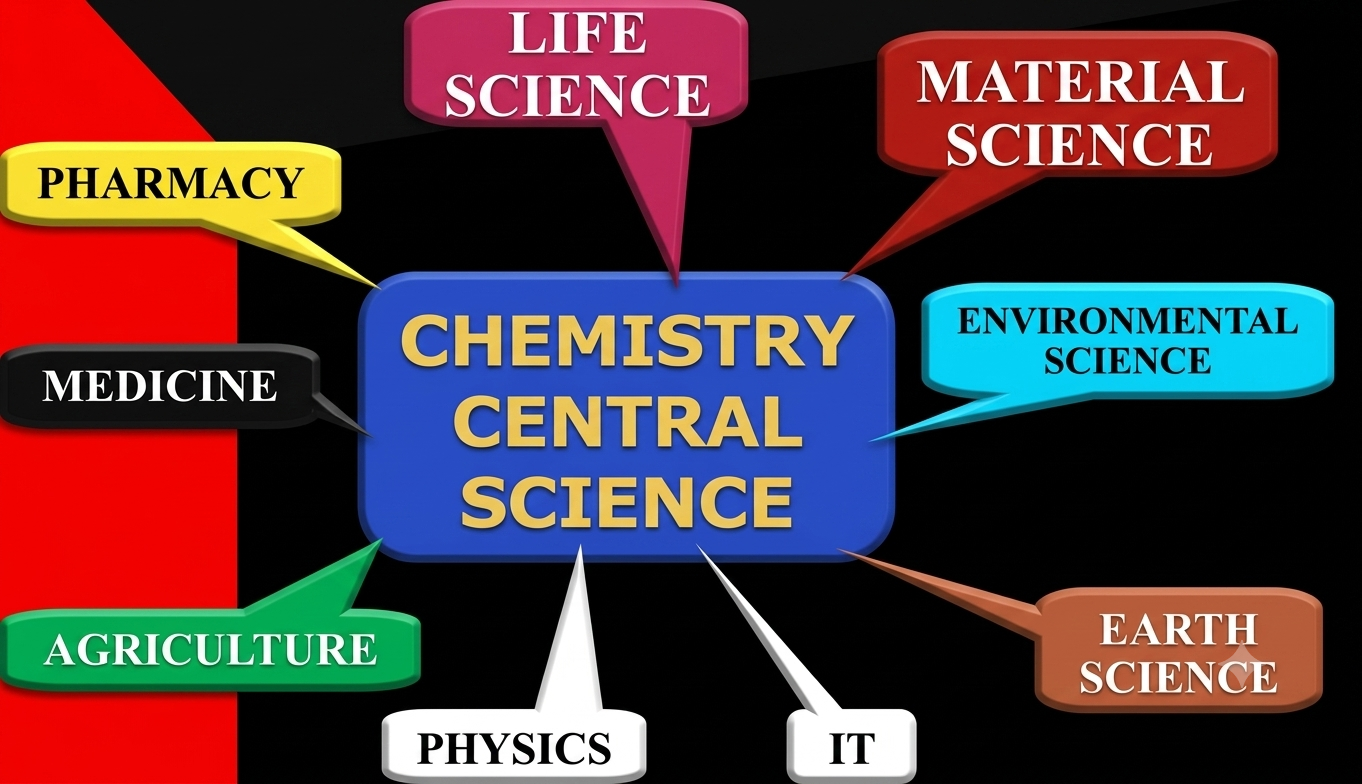
Figure 2: Chemistry lies more or less in the middle, emphasising its importance to many branches of science
Main Scopes of Chemistry
Using library resources, the internet, or AI tools, write a short article or make a presentation on:
“The Importance and Scope of Chemistry”
Focus especially on how chemistry plays a role in YOUR daily life. Think about the food you eat, the medicines you take, the materials in your home, and the environment around you.
3 ⚛️ Basic Concepts of Chemistry ▼
Atoms
An atom is the smallest, fundamental unit of an element that possesses the properties of that element. E.g., Cl represents the chlorine atom.
Atoms are the smallest units of an element that participate in chemical reactions. Most atoms don’t exist in a Free State in nature, except for the atoms of noble gases.
Molecule
A molecule is the smallest particle of an element or compound that has independent existence. E.g., CO₂ is a molecule of Carbon dioxide. Cl₂ is a molecule of the element chlorine.
It possesses all the properties of the element or compound.
Homoatomic Molecules (atoms of the same element)
| Type | Examples |
|---|---|
| Monoatomic (1 atom) | He, Ne, Ar (noble gases) |
| Diatomic (2 atoms) | H₂, O₂, N₂, Cl₂, F₂, Br₂, I₂ |
| Triatomic (3 atoms) | O₃ (ozone) |
| Tetraatomic (4 atoms) | P₄ (phosphorus) |
| Octaatomic (8 atoms) | S₈ (sulfur) |
Heteroatomic Molecules (atoms of two or more different elements)
- Water: H₂O (2 hydrogen + 1 oxygen)
- Carbon dioxide: CO₂ (1 carbon + 2 oxygen)
- Sulfuric acid: H₂SO₄ (2 H + 1 S + 4 O)
Ions / Radicals
An ion (also called a radical) is an atom or group of atoms that has gained or lost electrons, giving it an electric charge.
| Type | Charge & Examples |
|---|---|
| Cation (positive ion) | Lost electrons → positive charge. e.g., Na⁺, Ca²⁺, NH₄⁺, Fe³⁺ |
| Anion (negative ion) | Gained electrons → negative charge. e.g., Cl⁻, O²⁻, SO₄²⁻, OH⁻ |
In salts, the positive ion (cation) is called the basic radical, and the negative ion (anion) is called the acidic radical. Example: In NaCl (table salt), Na⁺ is the basic radical and Cl⁻ is the acidic radical.
Valency
The combining capacity of an atom of an element or ion is called valency. For example, the valency of sodium in sodium chloride is 1; the valency of Mg in MgSO₄ is 2; the valency of carbonate (CO₃²⁻) is 2.
Variable Valency
Some elements, especially d-block (transition) elements, can have different valencies:
| Element | Valencies (with traditional names) |
|---|---|
| Iron (Fe) | +2 (ferrous) and +3 (ferric) |
| Tin (Sn) | +2 (stannous) and +4 (stannic) |
| Mercury (Hg) | +1 (mercurous) and +2 (mercuric) |
| Lead (Pb) | +2 and +4 |
| Copper (Cu) | +1 and +2 |
Give names to the above two forms of Pb and Cu.
🧩 Quick Quiz: Atoms, Molecules & Ions
Test your understanding of atoms, molecules, ions, and valency before moving on.

4 🧬 Chemical Formula ▼
The symbolic representation of a molecule of a substance is called the chemical formula. E.g., H₂O is the formula for water, and NaCl is the formula for sodium chloride.
Molecular Formula
A molecular formula shows the actual number of each type of atom in one molecule of a substance.
| Substance | Molecular Formula |
|---|---|
| Water | H₂O — 2 hydrogen atoms and 1 oxygen atom |
| Sulfuric acid | H₂SO₄ — 2 H, 1 S, 4 O atoms |
List of Radicals / Ions
| Radical | Formula | Radical | Formula |
|---|---|---|---|
| Sulphate | SO₄²⁻ | Bisulphate | HSO₄⁻ |
| Sulphite | SO₃²⁻ | Bisulphite | HSO₃⁻ |
| Sulphide | S²⁻ | Hydroxide | OH⁻ |
| Carbonate | CO₃²⁻ | Bicarbonate | HCO₃⁻ |
| Nitrate | NO₃⁻ | Nitrite | NO₂⁻ |
| Phosphate | PO₄³⁻ | Cyanide | CN⁻ |
| Fluoride | F⁻ | Chloride | Cl⁻ |
| Bromide | Br⁻ | Iodide | I⁻ |
| Chromate | CrO₄²⁻ | Peroxide | O₂²⁻ |
| Dichromate | Cr₂O₇²⁻ | Permanganate | MnO₄⁻ |
| Hydride | H⁻ | Thiosulphate | S₂O₃²⁻ |
| Hypochlorite | ClO⁻ | Chlorate | ClO₃⁻ |
| Perchlorate | ClO₄⁻ | Iodate | IO₃⁻ |
| Ammonium | NH₄⁺ | Ferricyanide | [Fe(CN)₆]³⁻ |
| Ferrocyanide | [Fe(CN)₆]⁴⁻ |
Check your knowledge of ionic radicals and their formulas before learning the criss-cross rule.
Writing Formulas: The Criss-Cross Rule
To write the formula of a compound from its ions, swap the valencies of the two ions to become the subscripts of the other.
Calcium ion: Ca²⁺ (valency = 2)
Sulphate ion: SO₄²⁻ (valency = 2)
Criss-cross: Ca₂(SO₄)₂ → simplify → CaSO₄
So, calcium sulphate = CaSO₄ ✓
🧩 Quick Quiz: Chemical Formulas & Molecular Mass
Test yourself on chemical formulas and molecular mass before diving into relative atomic mass.
5 ⚖️ Relative Atomic Mass ▼
Since atoms are extremely small, it is nearly impossible to measure the mass of individual atoms. Hence, the lightest element, hydrogen, was first taken as the reference.
Later, the C-12 isotope was taken as the standard by IUPAC:
Atomic mass has no unit, but the atomic mass unit (amu) or Dalton (D) is used for convenience.
Don’t confuse atomic mass with mass number!
- Mass number = total protons + neutrons in one specific atom (always a whole number)
- Relative atomic mass = average mass compared to C-12 (often a decimal, due to isotopes)
Make a personal study card listing the first 30 elements with their name, symbol, atomic number, and atomic mass. Review it daily until you know them from memory!
Atomic Masses of the First 30 Elements
| Atomic No. | Element | Symbol | Atomic Mass (amu) | Rounded |
|---|---|---|---|---|
| 1 | Hydrogen | H | 1.008 | 1 |
| 2 | Helium | He | 4.00 | 4 |
| 3 | Lithium | Li | 6.94 | 7 |
| 4 | Beryllium | Be | 9.01 | 9 |
| 5 | Boron | B | 10.81 | 11 |
| 6 | Carbon | C | 12.01 | 12 |
| 7 | Nitrogen | N | 14.01 | 14 |
| 8 | Oxygen | O | 16.00 | 16 |
| 9 | Fluorine | F | 19.00 | 19 |
| 10 | Neon | Ne | 20.18 | 20 |
| 11 | Sodium | Na | 22.99 | 23 |
| 12 | Magnesium | Mg | 24.31 | 24 |
| 13 | Aluminium | Al | 26.98 | 27 |
| 14 | Silicon | Si | 28.09 | 28 |
| 15 | Phosphorus | P | 30.97 | 31 |
| 16 | Sulfur | S | 32.07 | 32 |
| 17 | Chlorine | Cl | 35.45 | 35.5 |
| 18 | Argon | Ar | 39.95 | 40 |
| 19 | Potassium | K | 39.10 | 39 |
| 20 | Calcium | Ca | 40.08 | 40 |
| 21 | Scandium | Sc | 44.96 | 45 |
| 22 | Titanium | Ti | 47.87 | 48 |
| 23 | Vanadium | V | 50.94 | 51 |
| 24 | Chromium | Cr | 51.99 | 52 |
| 25 | Manganese | Mn | 54.94 | 55 |
| 26 | Iron | Fe | 55.85 | 56 |
| 27 | Cobalt | Co | 58.93 | 59 |
| 28 | Nickel | Ni | 58.69 | 59 |
| 29 | Copper | Cu | 63.55 | 63.5 |
| 30 | Zinc | Zn | 65.38 | 65.5 |
6 🔢 Relative Molecular Mass ▼
The molecular mass is calculated by summing up the masses of all atoms present in the molecular formula.
H = 1, O = 16
Mr(H₂O) = (2 × 1) + (1 × 16) = 2 + 16 = 18 amu
Cu = 63.5, S = 32, O = 16, H = 1
Mr = 63.5 + 32 + (4 × 16) + 5 × [(2 × 1) + 16]
= 63.5 + 32 + 64 + 5 × 18 = 63.5 + 32 + 64 + 90 = 249.5 amu
Concept of Fractional Atomic Mass
In nature, most elements exist as different isotopes. So, the atomic mass of an element is taken as an average of different isotopes found in nature. This is why the atomic masses of most elements are fractional.
Chlorine is naturally made up of 75% Cl-35 isotope and 25% Cl-37 isotope. Calculate the atomic mass of chlorine.
Solution: Average atomic mass of Cl = (75 × 35 + 25 × 37) ÷ 100 = 35.5 amu
7 🔣 Empirical Formula ▼
The empirical formula of Ethene (C₂H₄) is CH₂, and the empirical formula of water (H₂O) is H₂O.
| Compound | Molecular Formula | Empirical Formula |
|---|---|---|
| Hydrogen peroxide | H₂O₂ | HO |
| Benzene | C₆H₆ | CH |
| Ethane | C₂H₆ | CH₃ |
| Glucose | C₆H₁₂O₆ | CH₂O |
| Carbon dioxide | CO₂ | CO₂ |
| Butane | C₄H₁₀ | C₂H₅ |
8 📊 Percentage Composition ▼
Worked Example: Washing Soda — Na₂CO₃·10H₂O
Step 1: Calculate the molecular mass:
- Na: 23 × 2 = 46
- C: 12 × 1 = 12
- O (in CO₃): 16 × 3 = 48 & in H₂O: 16 × 10 = 160
- H: 1 × 20 = 20
- Total Mr = 46 + 12 + 48 + 160 + 20 = 286 amu
Step 2: Calculate each percentage:
- % Na = (46 ÷ 286) × 100 = 16.08%
- % C = (12 ÷ 286) × 100 = 4.20%
- % O = (208 ÷ 286) × 100 = 72.73%
- % H = (20 ÷ 286) × 100 = 6.99%
Test your grasp of atomic mass, fractional mass, and isotopes before the atomic symbol notation.
Atomic Symbol Notation
The full symbol for an atom shows its mass number as a superscript and its atomic (proton) number as a subscript.
🧩 Quick Quiz: Empirical Formula & Percentage Composition
A final check on empirical formulas and percentage composition before the chapter summary.
🗝️ Chapter Summary
- • Chemistry — the study of the composition, properties, and transformation of matter
- • Matter — anything with mass that occupies space
- • Atom — smallest unit of an element that retains its chemical properties
- • Molecule — smallest particle of an element/compound that can exist independently
- • Ion/Radical — an atom or group of atoms with a positive or negative charge
- • Cation — positive ion (lost electrons); Anion — negative ion (gained electrons)
- • Valency — combining capacity of an atom or ion
- • Molecular formula — actual number of atoms in a molecule
- • Empirical formula — simplest whole-number ratio of atoms
- • Relative atomic mass — how heavy an atom is compared to 1/12 of C-12
- • Relative molecular mass — sum of atomic masses of all atoms in a molecule
- • Isotopes — atoms of the same element with different numbers of neutrons
- ✔ Isotopes = same atomic number (Z), different mass number (A)
- ✔ Atomic masses are fractional because of naturally occurring isotopes
- ✔ % composition = (element mass contribution ÷ molecular mass) × 100